
French Macaron Recipe dreams are made of delicate, colorful, and utterly delightful little cookies. Have you ever gazed longin extractgly at those perfect, pastel-hued macarons in a bakery window, wondering if you could possibly recreate that magic in your own kitchen? I certainly have! These exquisite meringue-based confections, sandwiched with luscious fillings, are more than just a dessert; they’re a miniature work of art. The magic of a French macaron lies in its captivating contrast: a crisp outer shell that gives way to a chewy, melt-in-your-mouth interior. It’s this textural symphony, combined with an almost endless array of flavor possibilities, that makes the French macaron so universally adored. Today, I’m thrilled to share my tried-and-true French Macaron Recipe with you, demystifying the process and guiding you towards your own sweet success.

French Macaron Recipe
Creating perfect French macarons can feel like a delicate dance, a blend of precision and patience. But don’t let the mystique deter you! With the right ingredients, a calm hand, and a little bit of understanding, you can absolutely achieve those beautiful, delicate, and utterly delicious little sandwiched cookies. This recipe is designed to guide you through each step, from preparing your ingredients to achieving that coveted chewy interior and smooth, glossy shell. Get ready to impress yourself and anyone lucky enough to share these treats!
Ingredients:
Creating the Macaron Shells
The foundation of a successful macaron lies in the dry ingredients and the meringue. Getting these two components just right is crucial.
Preparing the Dry Ingredients
1. Sift and Combine: In a medium bowl, combine your sifted super-fine almond flour, powdered sugar, and salt. Whisk them together thoroughly. The “super-fine” almond flour is key here; if you can only find regular almond flour, pulsing it in a food processor for a few seconds can help achieve a finer texture, but be careful not to over-process and turn it into almond butter. After combining, I like to sift this mixture through a fine-mesh sieve at least once, if not twice, into a clean bowl. This step is non-negotiable for smooth shells; it removes any larger almond pieces or clumps of powdered sugar, which will prevent cracking and ensure a beautiful surface. Discard any bits that don’t pass through the sieve.
Making the Italian Meringue
2. Whipping the Egg Whites: Place the room-temperature egg whites into the clean, grease-free bowl of your stand mixer (or a large mixing bowl if using a hand mixer). Begin extract whisking them on medium speed until they become frothy and opaque. Gradually add the granulated sugar, a tablespoon at a time, while the mixer is still running. Continue to beat on medium-high speed until you achieve stiff, glossy peaks. This means that when you lift the whisk, the meringue stands up straight and doesn’t flop over. This is the point where you’ll also add your liquid-gel food coloring and vanilla extract. Mix until the color is evenly distributed and no streaks remain. The Italian meringue method, while slightly more involved than French meringue, is more stable and less prone to collapsing, which is a significant advantage for macarons.
Macaronage: The Crucial Folding Technique
3. Folding the Dry into the Meringue: Now comes the technique known as “macaronage.” This is where you gently fold your sifted dry ingredients into the meringue. Add about one-third of the almond flour and powdered sugar mixture to the meringue. Using a rubber spatula, gently fold the dry ingredients into the wet. Imagin extracte you’re cutting through the center of the mixture and then bringin extractg the spatula up along the side of the bowl, turning the batter over on itself. Repeat this motion, rotating the bowl as you go. Continue adding the remaining dry ingredients in two more additions, folding gently after each. You’re looking for a batter that flows like “lava” or “ribbon.” When you lift your spatula, the batter should fall off in a thick, continuous ribbon, and when it lands in the bowl, it should slowly melt back into itself within about 20-30 seconds. Be careful not to overmix, or your macarons will spread too much and be flat. It’s better to err on the side of slightly under-mixed than over-mixed.
Piping and Resting
4. Piping the Shells: Transfer your macaron batter into a piping bag fitted with a round tip (about 1/2 inch in diameter). Prepare baking sheets by lining them with parchment paper or silicone baking mats. If using parchment, you can draw circles on the underside as guides, or simply try to pipe them uniformly. Hold the piping bag perpendicular to the baking sheet and pipe small, uniform rounds of batter, leaving about an inch of space between each. Once you’ve piped a tray, gently but firmly tap the baking sheet on your countertop several times. This crucial step helps to release any trapped air bubbles within the macarons, which can cause them to crack during baking, and also helps them to settle and achieve a smooth surface. You can then use a toothpick to gently pop any remaining visible air bubbles.
5. Resting and Baking: This is arguably the most important step for developing the “feet” of the macaron and achieving that perfect chewy texture. Let the piped macarons sit at room temperature for at least 30 minutes, and up to an hour or even longer depending on your humidity. You’ll know they’re ready to bake when they form a dry skin. If you gently touch one, it shouldn’t stick to your finger. Preheat your oven to 300°F (150°C). Bake the macarons for 12-15 minutes, or until the tops are firm and the “feet” have risen. You should be able to gently wiggle a macaron, and it shouldn’t feel loose on its feet. Ovens vary, so it’s essential to watch them closely during the last few minutes of baking. Once baked, remove the baking sheets from the oven and let the macarons cool completely on the baking sheets before attempting to remove them. Trying to remove them while warm will result in heartbreak and broken shells.
Assembly
Once your macaron shells are completely cooled, it’s time for the best part: filling them! Pair up similar-sized shells and pipe or spread your chosen filling – vanilla buttercream is a classic for a reason – onto the flat side of one shell. Then, gently sandwich it with its mate. For the best texture and flavor, I highly recommend letting your assembled macarons mature in an airtight container in the refrigerator for at least 12-24 hours before enjoying. This allows the flavors to meld and the shells to soften slightly, creating that signature chewy interior. Enjoy your homemade French macarons!
Conclusion:
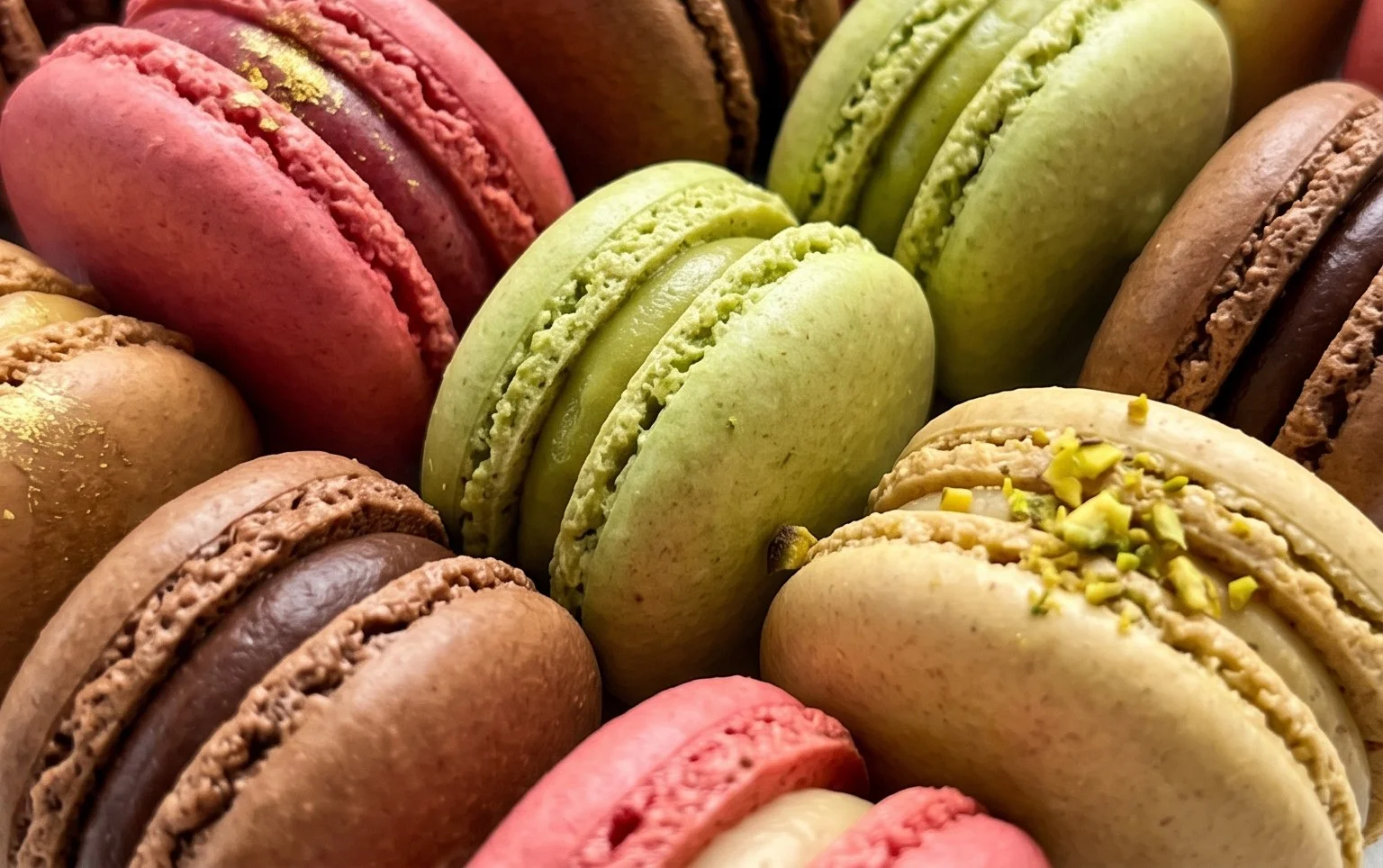
Making your own French macarons might seem daunting, but with this detailed French macaron recipe, you’re equipped to create these delicate, delightful meringue cookies right in your own kitchen. The satisfaction of achieving those perfectly smooth shells, that signature “foot,” and a chewy interior is incredibly rewarding. They’re not just beautiful; they offer a symphony of textures and flavors that will impress anyone. Don’t be discouraged by initial attempts; practice truly makes perfect with macarons.
These little gems are wonderfully versatile. Enjoy them as a sophisticated dessert for special occasions, a charming addition to afternoon tea, or simply as a sweet treat with your coffee. For serving, consider pairing them with fresh berries, a dollop of whipped cream, or a contrasting ganache. You can also get creative with variations: experiment with different food colorings for vibrant hues, infuse your fillings with extracts like lavender or rose, or even add a touch of zest like lemon or orange. The possibilities are endless!
I truly encourage you to give this French macaron recipe a try. Embrace the process, be patient, and celebrate each step. The joy of biting into a homemade macaron is an experience you won’t forget!
Frequently Asked Questions:
Why are my macaron shells cracking?
Cracking often happens due to over-whipped egg whites, too much moisture in your batter, or an oven that’s too hot. Ensure your meringue is stiff but not dry, and try to tap the baking sheets firmly to release air bubbles before baking. Also, confirm your oven temperature with an oven thermometer.
What does “macaronage” mean?
Macaronage is the crucial folding technique used to incorporate dry ingredients into the meringue. It involves gently folding the dry ingredients into the egg whites until the batter reaches a “lava-like” consistency – it should flow off your spatula in a thick ribbon and slowly melt back into itself.
Can I make macaron shells ahead of time?
Yes! Once baked and completely cooled, macaron shells can be stored in an airtight container at room temperature for a day or two, or refrigerated for up to a week. They often taste even better after a day or two as the filling helps to soften the shells.
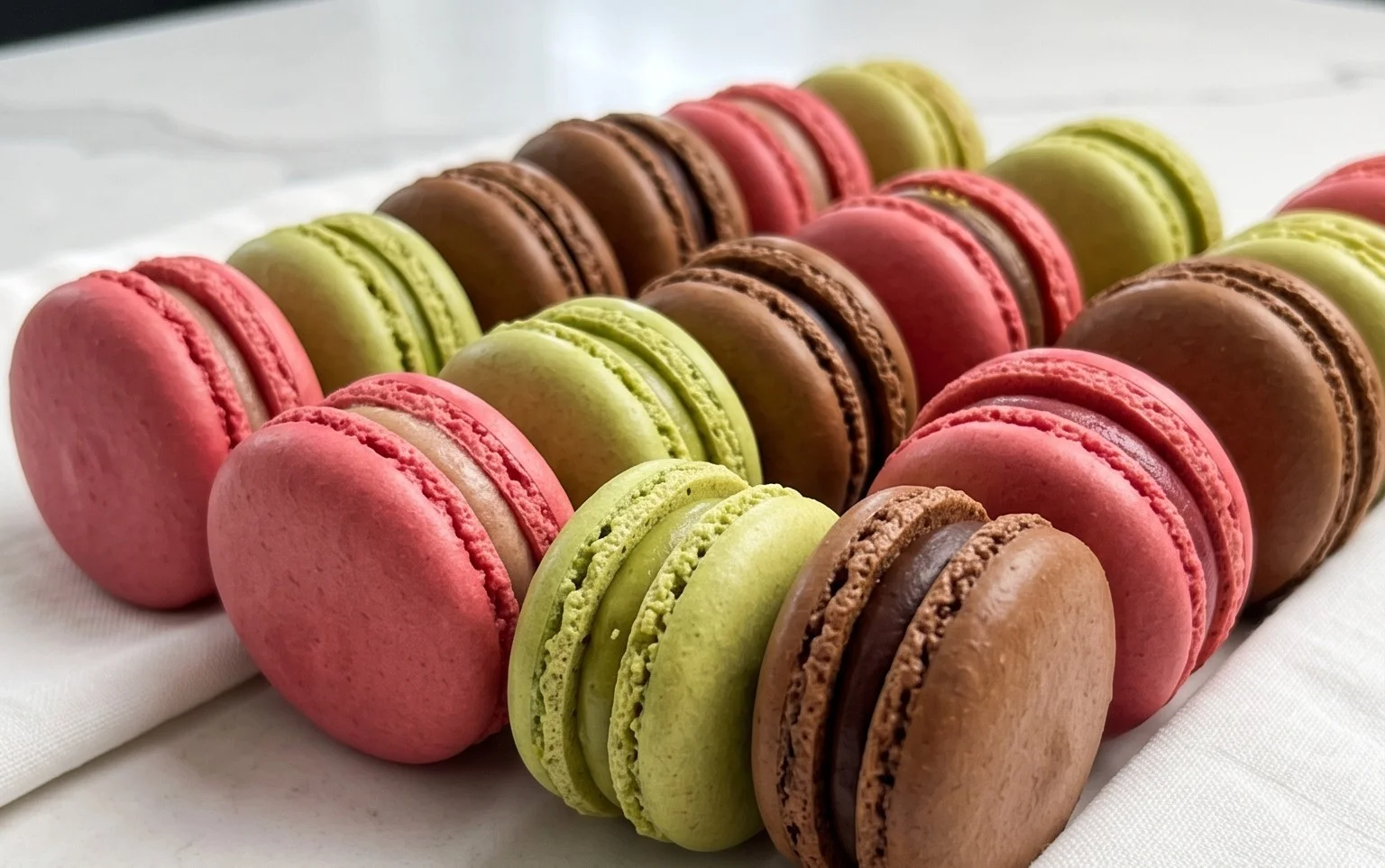
Classic French Macaron Recipe
A detailed recipe for making delicate and delicious French macarons with a vanilla buttercream filling.
Ingredients
-
150 grams sifted super-fine almond flour
-
180 grams powdered sugar
-
1/4 teaspoon salt
-
120 grams large egg whites (at room temperature)
-
60 grams granulated sugar
-
4 drops liquid-gel food coloring
-
1 teaspoon pure vanilla extract
-
Vanilla Buttercream Frosting (for filling)
Instructions
-
Step 1
Combine sifted almond flour, powdered sugar, and salt in a food processor and pulse until finely ground. Sift this mixture through a fine-mesh sieve into a large bowl. -
Step 2
In a separate clean bowl, whip the egg whites until frothy. Gradually add the granulated sugar, a tablespoon at a time, while continuing to whip until stiff, glossy peaks form. Add food coloring and vanilla extract and whip until evenly incorporated. -
Step 3
Gently fold the dry ingredients into the meringue mixture in two or three additions using a spatula. Mix until the batter reaches a lava-like consistency, falling in a thick ribbon from the spatula. -
Step 4
Transfer the macaron batter to a piping bag fitted with a round tip. Pipe small, uniform rounds onto baking sheets lined with parchment paper or silicone mats, leaving space between each macaron. -
Step 5
Tap the baking sheets firmly on the counter several times to release any air bubbles. Let the piped macarons sit at room temperature for 30-60 minutes, or until a skin forms on the surface. -
Step 6
Preheat oven to 300°F (150°C). Bake for 12-15 minutes, or until the macarons have developed ‘feet’ and are firm to the touch but not browned. Let them cool completely on the baking sheets before removing. -
Step 7
Once cooled, pair up macarons of similar size and pipe your chosen filling, such as vanilla buttercream, onto the flat side of one macaron, then gently press another macaron on top.
Important Information
Nutrition Facts (Per Serving)
It is important to consider this information as approximate and not to use it as definitive health advice.
Allergy Information
Please check ingredients for potential allergens and consult a health professional if in doubt.

Leave a Comment